Nakshatra 19 · Ruled by Ketu
Moola
The root star of radical truth, tearing away the surface to reach what is real beneath.
Begin reading

The root star of radical truth, tearing away the surface to reach what is real beneath.
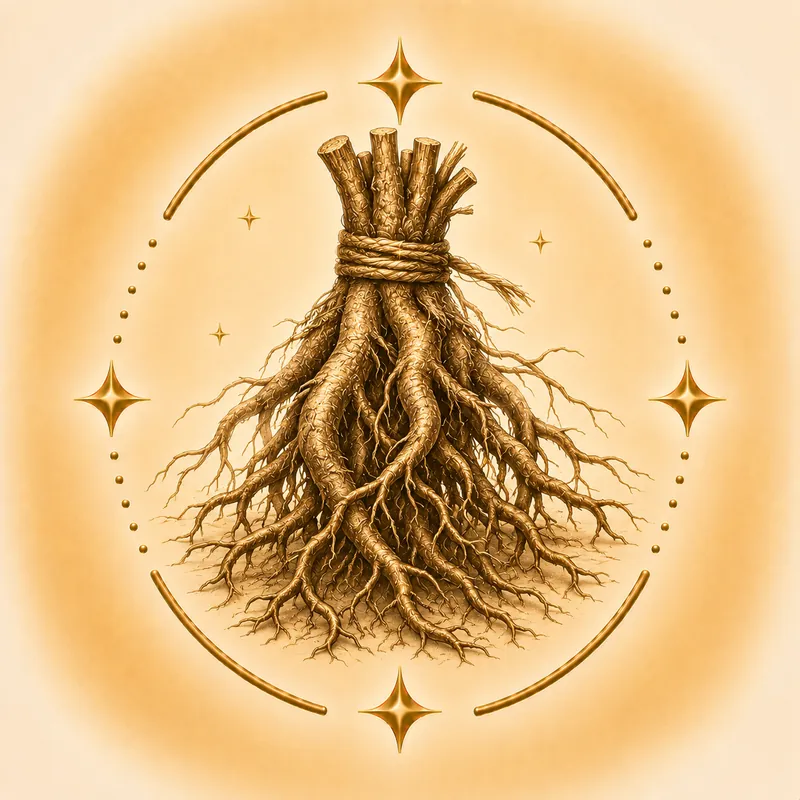
Moola (also spelled Mula) opens Sagittarius, ruled by Ketu and governed by Nirriti, goddess of dissolution. Its emblem is a bundle of tied roots, and its purpose is to dig down to the foundation of things. This is the star of endings that make room for truth.
Moola means "root," and its symbol — a bunch of tied roots — points straight to its nature. This star is not interested in surfaces. It wants the origin, the foundation, the buried cause beneath the visible problem. Ruled by Ketu, the shadowy south node associated with detachment, spirituality and letting go, Moola carries a restless drive to strip illusions away and reach what is genuinely true, even when the truth is uncomfortable. Ketu gives it a searching, philosophical, at times unworldly quality.
Its presiding deity is Nirriti, goddess of dissolution, decay and necessary endings — the force that clears away what has finished so that something new can begin. This makes Moola an intense placement. Its shakti is the power to break things to the root: to demolish, uproot and undo. But destruction here is not cruelty; it is the gardener pulling weeds, the truth-seeker dismantling comfortable lies. Placed at the very start of Sagittarius, this uprooting energy is ultimately in service of higher knowledge — Moola tears down the false so that real wisdom can grow.
Moola's symbol is a cluster of roots bound together — the hidden underside of a plant, the part that anchors and feeds it but never shows above the soil. It signals a mind drawn to origins and foundations, and a life that often involves being uprooted before being replanted. The deity Nirriti deepens this. Nirriti is the goddess of dissolution and calamity, keeper of endings, decay and the ground that receives what dies. She is fearsome in the old texts, yet essential: without her clearing away, nothing new could take root. Moola people carry her paradox. They may pass through difficult upheavals and losses, but these serve a purpose — burning away the inessential and returning them to the truth. The tied roots and the dissolving goddess together teach that real foundations are found only by digging through everything false above them.
Ketu rules Moola, and its detached, spiritual nature sets the tone. Ketu is the point of release — of things half-finished, of worldly attachments loosened, of a gaze turned toward the unseen. In Moola this becomes a hunger for essential truth and a certain restlessness with material comforts and social pretence. Ketu can bring sudden reversals and a sense of being cut loose, but it also grants deep insight, intuition and the capacity for genuine spiritual growth. Under Ketu, Moola is the seeker who is willing to lose the surface in order to find the root.
Moola people are natural investigators of the deep and hidden. They are unafraid to ask hard questions, dismantle comfortable assumptions and go to the root of any matter, which makes them formidable researchers, healers and truth-tellers. Ketu grants them intuition and a genuine spiritual bent; they often care little for status and much for meaning. Having weathered their own upheavals, they can guide others through endings and transformation with rare honesty. There is a fearless, unattached quality to them that lets them go where others will not.
The power to break to the root can turn on the self or on loved ones. Moola may tear things down impulsively, ending situations or relationships before their time, or grow so detached that it struggles to commit and stay. Ketu's influence can bring a sense of rootlessness, sudden losses, or a restlessness that mistakes destruction for progress. There can be an all-or-nothing intensity and a hard edge when disillusioned. The growth is patience: to discern what genuinely needs uprooting from what simply needs tending, and to let some things take root long enough to bear fruit.
In relationships Moola is honest to the point of rawness and craves a connection with real depth. Surface romance holds little appeal; it wants to know a partner completely and to be known in return, without pretence. When engaged, it brings intensity, philosophical companionship and a transformative quality — being close to Moola often changes a person, sometimes profoundly. It values truth over comfort and would rather face a hard reality together than maintain a pleasant illusion.
The difficulty is Ketu's detachment and the uprooting instinct. Moola may struggle to fully commit, feel a recurring pull toward freedom, or dismantle a bond when it senses something false. Its intensity can be turbulent, and endings may come suddenly. The path is to let relationships be a place where roots are allowed to grow rather than repeatedly pulled up for inspection. When Moola learns that lasting love and deep truth can coexist — that staying is not the same as settling — it offers a partnership of extraordinary honesty and depth.
Moola thrives wherever the goal is to reach the root cause and transform it. These people excel in research, investigation, medicine and healing, psychology and therapy, philosophy, spirituality and any field that involves getting beneath the surface. They also do well in work that requires dismantling and rebuilding — reform, crisis intervention, forensic and analytical roles, and the kind of pioneering that starts from scratch. Ketu's detachment lets them handle difficult, unglamorous or taboo material that others avoid.
Because Nirriti presides over necessary endings, Moola often finds itself in situations of upheaval and renewal, and it can be brilliant at guiding others through them. Its indifference to status and its truth-first nature mean it is rarely motivated by money or prestige alone; it needs work that feels meaningful. The caution is a tendency to burn bridges or abandon paths abruptly. Learning to persevere, to build as well as uproot, and to channel its transformative power constructively turns Moola into a profound agent of genuine change.
Moola's growth lies in learning what to uproot and what to let grow. Its gift is fearless truth and the courage to end what is false, but the same power becomes destructive when it tears down impulsively or refuses to let anything take hold. Guided by Ketu, the lesson is to hold detachment and commitment together — to seek the root without pulling up every plant to check. When Moola tempers its dissolving instinct with patience, it stops merely destroying and begins to clear the ground for real, lasting things to grow. Its endings then become genuine beginnings, and its restlessness matures into wisdom.
Moola belongs to the Rakshasa gana, giving it an intense, independent and unconventional temperament that other Rakshasa stars understand better than gentler Deva placements sometimes do. Its Ketu-ruled, truth-seeking nature pairs best with partners who value depth and honesty and are not unsettled by its need for freedom and transformation. Traditional matching also weighs its Sagittarius idealism and its capacity for upheaval. Yet the birth star is only one strand of the picture. A real compatibility reading looks at both entire charts — Moon, ascendant, Venus and the whole planetary balance — so take this as insight for reflection, never a judgement on an actual bond.
In the Vedic naming tradition, a child born under Moola is often given a name beginning with one of these four syllables — one for each pada.
Your nakshatra is where the Moon stood at your birth — the finer detail beneath your Moon sign. Cosmiclogy reads it sidereally (Lahiri), as part of your whole chart.
One placement among many — see how the whole chart fits together →
Moola (also spelled Mula) is the nineteenth nakshatra, spanning Sagittarius 0°00' to 13°20'. Its name means "root," and it represents the drive to reach the foundation of things and clear away what is false.
Moola is ruled by Ketu, the detached, spiritual south node, and its deity is Nirriti, goddess of dissolution and necessary endings — the force that clears away the finished to make room for the new.
Its symbol is a bunch of tied roots. It signifies a nature drawn to origins and foundations, and a life that often involves being uprooted so that deeper, truer growth can begin.
Moola is intense rather than simply easy. It can bring upheaval and endings, but these serve transformation — its true fortune is spiritual depth, fearless honesty and the wisdom that comes from reaching the root.
As an independent Rakshasa-gana star, Moola connects best with honest, depth-loving partners who respect its need for freedom. Real compatibility, though, depends on comparing both full charts rather than the birth star alone.
A Cosmiclogy profile finds your janma nakshatra and reads it with your whole chart — in plain language.
Get your Cosmic Profile