Nakshatra 10 · Ruled by Ketu
Magha
The royal throne of the ancestors, where dignity, lineage and legacy converge.
Begin reading

The royal throne of the ancestors, where dignity, lineage and legacy converge.
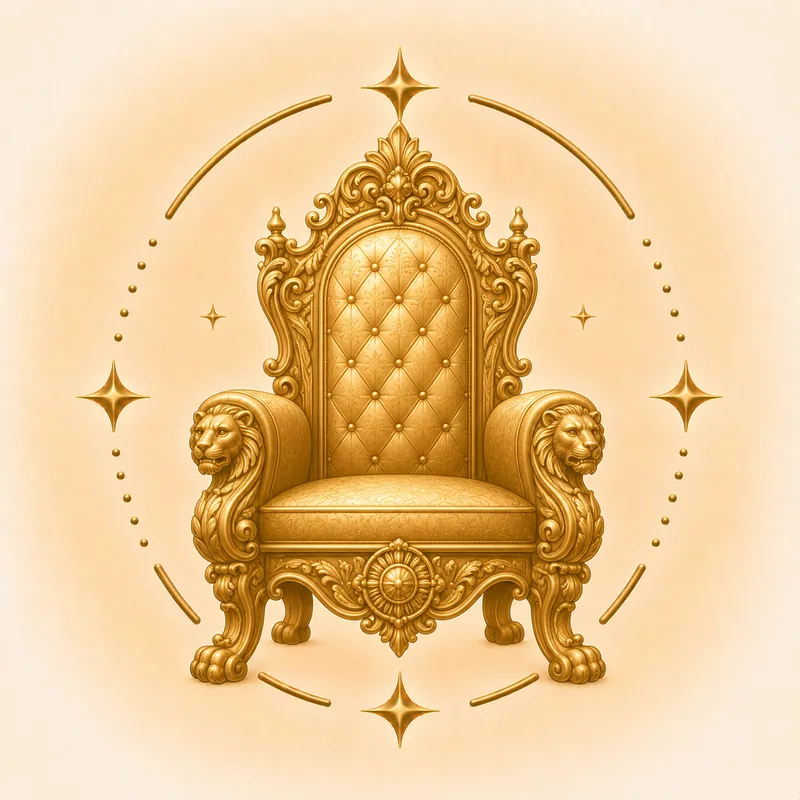
Magha is the star of the throne, ruled by Ketu and honoured by the Pitris — the ancestral fathers who came before. It carries innate dignity, a sense of belonging to something larger than oneself, and the shakti to honour the ancestors. Here, greatness is inherited and then earned.
Magha means "the mighty" or "the great," and it opens the sign of Leo with an unmistakable air of authority. Its symbol is a royal throne — the seat of power, tradition and rightful place. People shaped by Magha often carry a natural gravity, a sense that respect is owed and dignity is not to be surrendered. They are conscious of legacy, of standing, of doing things properly and honourably. Where other stars strive upward, Magha begins already seated; its work is to prove worthy of the chair.
Ruled by Ketu, the point of the past and of dissolution, Magha's power is not really personal — it flows down from those who came before. The presiding deities are the Pitris, the ancestral fathers, and the shakti is the power to honour the ancestors. This gives Magha a deep, almost sacred relationship to lineage, roots and inherited duty. Many feel they carry a family's hopes, name or unfinished business. At its finest, Magha wears authority as service — leading, protecting and honouring the line it springs from rather than merely commanding.
The throne is the seat that outlasts whoever sits in it — a symbol of authority that is inherited, held in trust, and passed on. It speaks of dignity, ceremony, rightful place, and the responsibility that comes with power. To sit on the throne is to represent everyone who sat there before. This is why Magha's deities, the Pitris, matter so deeply: they are the ancestral fathers, the departed elders whose blessings sustain the living line. In Vedic tradition the Pitris are honoured through remembrance and rites, and their favour brings continuity and strength. Magha natives often feel this pull toward their roots — a reverence for heritage, elders and tradition, and sometimes a burden of expectation. The throne and the ancestors together teach Magha's central truth: real authority is borrowed from those who came before, and must be carried with honour.
Ketu rules Magha, and its influence is subtle but defining. Ketu is the point of dissolution, detachment and the past — the karmic tail that carries what has already been lived. In Magha this turns power inward and backward, toward ancestry, memory and inherited destiny. It grants a certain otherworldly dignity and a sense that worldly status is both deeply felt and, ultimately, transient. Ketu can make Magha natives idealistic about honour yet detached from ego's rewards. The lesson it offers is to hold high position lightly — to serve the lineage rather than cling to the throne.
Magha natives lead as though born to it — with poise, presence and a genuine sense of responsibility for those in their care. They are loyal to family, principle and heritage, and generous in the grand, open-handed way of true nobility. There is real warmth beneath the dignity; they protect and uplift the people who depend on them. Their reverence for tradition makes them keepers of continuity — the ones who remember, honour and carry forward. When Magha's authority is rooted in service rather than pride, these natives become inspiring, dependable figures whom others instinctively follow and trust.
Magha's shadow is the throne without the service. When identity fuses too tightly with rank, dignity can slide into pride, and rightful confidence into entitlement. Some natives grow preoccupied with status, titles and being seen to be respected, needing recognition to feel secure. Because they are used to a certain deference, relating to equals — or admitting fault — can feel unexpectedly hard. The path here is gentle but clear: the throne means nothing without the honour of those who granted it. Remembering the ancestors, and that authority is borrowed and temporary, keeps Magha noble rather than merely proud.
In love, Magha is warm, generous and deeply loyal, treating a partner as someone to be honoured and provided for. These natives take relationships seriously, often through the lens of family, commitment and building something lasting and respectable. They give wholeheartedly and expect to be met with equal devotion and respect. When cherished, they are magnanimous, protective and steadfast — partners who show up fully and stand tall beside the one they love.
The tender spot is pride. Magha can need admiration to feel secure, and a slight to its dignity may wound more than the moment warrants. It can also carry the weight of family expectation into a relationship, wanting approval from every quarter. The steadiest Magha bonds come with a partner who offers genuine respect freely, meets Magha as an equal, and gently reminds it that love is shared, not bestowed from a throne.
Magha belongs in roles of authority, responsibility and standing. Its natives thrive in leadership, management, governance, law, and any institution where dignity and continuity matter. They excel where they can represent something larger than themselves — organisations, traditions, communities — and are often drawn to public life, ceremony and positions that carry prestige and duty in equal measure. History, heritage work, family enterprise and mentorship also resonate deeply, given Magha's bond with the past.
Ketu's rulership adds an idealistic streak: many Magha natives want their work to mean something beyond money or title, to honour a lineage or leave a worthy legacy. They perform best when trusted and given real responsibility; micromanagement chafes against their innate authority. Their challenge is to lead as servants of those they guide rather than as occupants of a pedestal. When they do, they become the kind of leader people remember with genuine respect — dignified, protective, and true to something enduring.
Magha's growth lies in the space between inheriting authority and deserving it. Position, respect and lineage are given; honour must be earned, again and again, through how one treats others. The invitation is to hold dignity without hardening into pride — to lead by lifting people up rather than standing above them. Reconnecting with the Pitris, in spirit if not in ritual, reminds Magha that its strength is borrowed from those who came before and meant to be passed on. As it learns to serve the throne rather than sit possessively upon it, Magha becomes genuinely noble — powerful, humble, and worthy of the seat.
Magha is a Rakshasa-gana star with strong, dignified energy, and it tends to pair well with other fire-natured and loyal nakshatras that share its warmth, ambition and respect for commitment. It often harmonises with fellow Leo-natured stars and with steady partners who admire its leadership without competing for the throne. Relationships with very detached or status-indifferent partners can feel mismatched, while two equally proud natives may clash over precedence. As always, this is one signal among many. Genuine compatibility is judged from the entire chart — the Moon, Venus, seventh house and the meeting of two full horoscopes — so treat Magha's star-match as guidance, not conclusion.
In the Vedic naming tradition, a child born under Magha is often given a name beginning with one of these four syllables — one for each pada.
Your nakshatra is where the Moon stood at your birth — the finer detail beneath your Moon sign. Cosmiclogy reads it sidereally (Lahiri), as part of your whole chart.
One placement among many — see how the whole chart fits together →
Magha is the tenth nakshatra, spanning Leo 0°00' to 13°20'. Called the throne star, it is associated with royalty, authority, ancestry and inherited dignity.
Magha is ruled by Ketu and presided over by the Pitris, the ancestral fathers whose blessings sustain the living line.
Its symbol is a royal throne — the seat of inherited power, dignity and duty, held in trust for those who came before and those who follow.
Magha carries genuine gifts of leadership, dignity and respect, and is considered powerful. Its blessing depends on honouring its roots and leading through service rather than pride.
As a proud, loyal fire star of the Rakshasa gana, it pairs best with warm, committed partners who respect its authority — but true compatibility is read from the whole chart, not the birth star alone.
A Cosmiclogy profile finds your janma nakshatra and reads it with your whole chart — in plain language.
Get your Cosmic Profile